
Aquatecture 2: Perspectives of Water Architecture
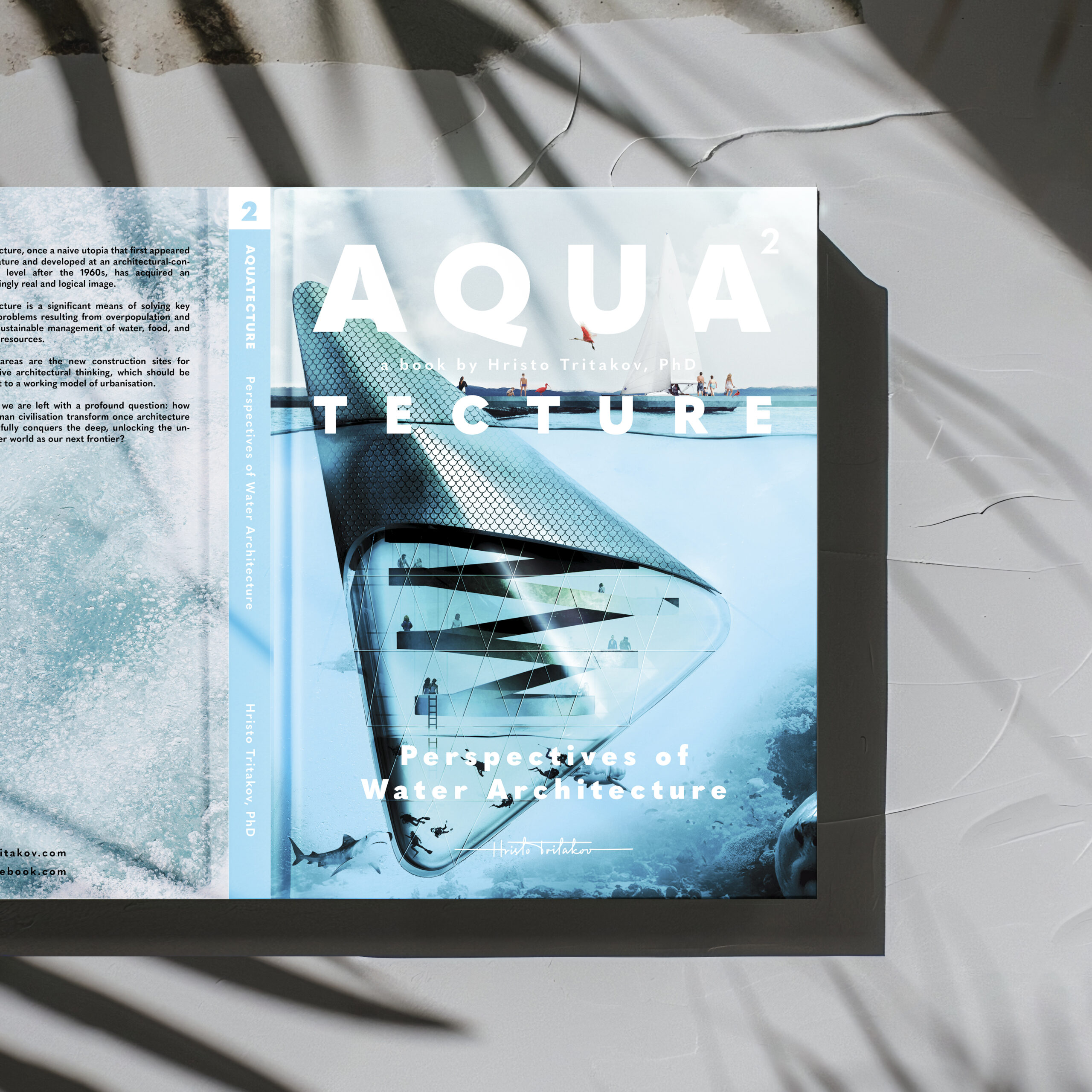
Aquatecture 2: Perspectives of Water Architecture is the second volume of the Aquatecture book series by Bulgarian architect Hristo Tritakov, PhD. It explores the architectural and urban-planning perspectives of water environments – from floating structures and offshore megacities to experimental forms of habitation – and how architecture can treat water as a new territory for construction, infrastructure and human settlement. The book is available worldwide on Amazon in colour and black-and-white editions.
About the book
Many of today’s deepening problems of the urban environment can be solved to a large extent by means of aquatecture. Overpopulation, the lack of space on the mainland and the rising level of the World Ocean are just some of the challenges for architects and urbanists of the 21st century. They call for forward planning that is flexible enough to respond to the rising standards of modern urban living.
Global challenges require international policies and solutions that lead the world towards safer living conditions, secure resources and high-quality housing for as many people as possible. Human civilisation needs a sustainable direction of development – one that looks not only to space, but also to the water environment as an area with undiscovered resource, architectural and urban-planning potential.
Perspectives for coastal cities
From an architectural point of view, it is important to identify and evaluate the key features and planning opportunities of water areas, in order to plan more sustainable, flexible, safe and successful energy and infrastructure development for coastal cities, both in the near and the distant future.
This new type of urbanisation should bring working models into practice that can be used anywhere in the world. Coastal urban structures could become an increasingly desirable place to live, offering a high quality of life to tens of millions of people.
Floating cities, ocean centres and the future of water urbanism
Conceptual projects around the world are helping us see aquatecture as a real possibility. Floating farms and energy centres, cities in the open sea and under water are becoming ever more relevant and achievable, both technologically and practically.
The water surface is a vast new building site – a place for new urban functions that support the housing, commerce and resources of the world’s key coastal megalopolises. In a globalised world, these will strengthen trade and cultural ties between distant parts of the world, making the World Ocean an increasingly important means for the further development of civilisation.
The book also considers conceptual designs for mid-ocean aquatic centres: multifunctional floating megalopolises with permanent habitation and their own resources, located on key water transport corridors and focused on exploring the surrounding waters and their depths.
Roots in retrofuturism
In the search for the future potential of aquatecture, an important place belongs to the retrofuturistic theories of the 19th and 20th centuries – from the Japanese Metabolism movement to the founding works of science fiction.
Get the book
- Aquatecture 2: Perspectives of Water Architecture – colour edition on Amazon
- Aquatecture 2 – black-and-white edition on Amazon
- More about the series: aquatecturethebook.com
The Aquatecture book series
- Aquatecture 1: Potential of Water Architecture
- Aquatecture 2: Perspectives of Water Architecture (this volume)
- Aquatecture 3: In Search of New Form and Function – forthcoming
- Aquatecture 4: Prototypes of Water Settlements – forthcoming
The series builds on the doctoral research Aquatecture: Potential of Architecture in Water Environment (UACEG, Sofia). A bilingual Bulgarian–English edition, Акватектура. Aquatecture, is also available. See all books and papers on the Publications page.